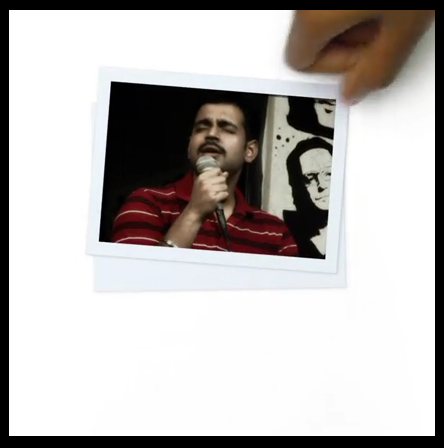
Today, on the occasion of FB's 12th anniversay, you must have seen your customised Friend's day video. I was delighted with the one made for me, but had no intent of sharing it.
But I wanted to download it. I am sure, even you want to download it and enjoy. Here are the steps (for Google Chrome);
1. Right Click on the video and click 'Inspect'
2. A window opens with the HTML layout. Scroll to the layout for the video.
3. You can see the video link here. Double click on the src field to select the link. Right Click and Copy.
5. Paste the link in a new tab, and the video opens
6. Right Click on the video, and select 'Save Video As'. On the prompt that appears next, give a suitable name and save on your machine.
I came across this description of the procedure of Pranayama in an old book and found it worth reading and practicing. This isn't available in the text format on the internet, hence typed it down. I hope, dear reader, you will find some good insights from this article.
Pranayama
From The Vishnu Sahasranama Translated into English
by R. Ananthakrishna Shastry (1927)
From - http://www.yoga-manchester.co.uk/
The utility and importance of this fundamental Yoga practice have not been fully realised by us. Vyasa says in a hymn 'The Lord Vishnu himself is Yoga and the leader of all the Yogins(slo. 16), the Yogi and the Lord of the Yogins(slo. 104)'. The ancients have perfected it to a science, but it is lost to us to a considerable extent through our own folly. It is the sacred duty of every true Arya to revive it. The desire for material advancement has supplanted the yearning for spiritual progress. At present, the yearning for Swaraj has well nigh become universal; but the people have not yet realised that unless and until they are healthy - physically, mentally and morally - they can never hope to become a Nation and attain Swaraj. In ancient times, the Aryas were a very strong and powerful race, imbued with the highest of virtues, so the word Arya came to connote strength and Anarya, weakness. The Aryas attained and retained unto death their bodily and mental perfection by the simple but effective method of Pranayama. To them death had no horrors. Just as one throws off one's worn out garments, even so they cast off their body by their own free will by the power of Yoga.
The Shastraic method is to get up at Brahma Muhurta i.e. before the breaking of the dawn, and finish the morning ablutions. After Achamana - sipping water - perform the breathing exercises, the Pranayama, in a well ventilated place. Sit cross-legged facing east or north, with the back straight, chest well expanded and thrust forward and the head erect. First exhale(Rechaka) all the air slowly through one or both the nostrils, and then inhale(Puraka) slowly and deeply, and exhale as before. While exhaling and inhaling produce a low humming sound in the throat. Repeat the Rechaka and Puraka alternately for about ten minutes. Next, restraint of breath or Kumbhaka must be practiced. Inhale slowly, with the production of the humming sound in the throat as before, but retain the breath as long as possible without straining yourself and exhale completely all the air out. Again inhale slowly and deeply, restrain and exhale as before. Repeat this process for about five to ten minutes and gradually increase the duration of Kumbhaka.
While performing Rechaka, Puraka and Kumbhaka, it will be easy for beginners if they use one or more fingers to close up one or both the nostrils. When one has made some progress in Pranayama, then by merely willing, the air can be made to flow in or out through any nostril or it may be kept in Kumbhaka.
The third practice is Bhasra (bellow) and it is done for the next five or six minutes. Sitting erect as before and with the lips closed, blow out the air, with the hissing sound of a starting locomotive engine, rapidly. While blowing in this way the trunk of the body is steady, but the abdomen becomes concave and flat in quick succession, due to the alternate contraction and relaxation of the abdominal muscles. The naval region swings inward and out with maximum amplitude The Bhasra can also be practiced in the evening provided the stomach is empty. By this practice, the intestines get exercised, the digestive powers are greatly improved, the free circulation of blood is facilitated and the lungs are strengthened. The bowels also are kept in order by removing constipation.
Success in Pranayama can be attained only if the diet is a well regulated one. Any non-stimulating, simple and nutritious diet will do. It is well to remember and practice the Vedic ordinance 'Ekavaram Dvivaram Va' which enjoins only one meal a day or at the most two. Seven hours at least must elapse between the two meals.
This may be practiced by all persons irrespective of age or sex, excepting women in the family way, who should not attempt the Bhasra. But chronic patients afflicted with bowel or lung diseases should be carefully guided by a scientifically trained instructor.
It is very depressing to note that generally Indians and especially South Indians, have become physically degenerated; the more educated they are the more physically depressed they have become. The golden precept enjoining Brahmacharya(restraint) on a Grihasta by our Shastras, has been totally ignored. Excessive indulgence in stimulants, coffee, tea etc. and in matters pertaining to sex, irregular and hurried meals - meals noted for their flavor alone but not for their sustaining qualities - and want of regular exercise for the body, have brought about this present condition. Systematic practice of Pranayama by our young men with a well regulated diet and observance of the principles laid down for the conduct of Brahmacharins and of the Grihastas will in a generation or two regenerate them into a virile people.
By the grace of the Divine Physician, 'Daivyah Bhishak', the Lord, all the incurable diseases are cured. May our degenerate young men take up these practices and become healthier, is the pious wish of the author!
Note - My latest recording of this song, 6 years after this post. Do listen, like and subscribe:)
KaTyaar KaLjaat Ghusali is a landmark movie in the history of modern Marathi Cinema. Based on a Sangeet Natak by the same name, it is an attempt at portraying the story in a cinematic format, with aesthetics which cannot be possible done in a live musical play.
It has most of the original songs composed by Pt. Jitendra Abhisheki, one among the very few who helped preserve and popularise Naatya Sangeeta in modern times. The soundtrack contains some new tracks too. It is a beautiful work of art by the composers Shankar-Ehsan-Loy and the singers Shankar Mahadevan, Rahul Deshpande and Mahesh Kale.
Shankar Mahadevan as Panditji
One of the new songs from the sound track is Mana Mandira, beautifully sung by Shankar Mahadevan. There is also a version by his younger son Shivam which is wonderfully done, considering his young age. Shankar ji's improvisations towards the end of the song are very impressive.
In the movie, the picturisation of this song is a highlight. Panditji (Shankar Mahadevan) is leading his young disciple Sadashiva to the forest, with a promise of manifesting fireflies with the help of music. To do that, he sings this divine song and in the process, not only teaches music to his protege but also imparts knowledge about the values of a good Saadhaka.
The Divine vibrations and ideas expressed in the song inspired me to attempt a translation of its straightforward but philosophically rich lyrics, written by Mandar Cholkar.
मन मंदिरा…
Based on Raaga Des
Lyrics - Mandar Cholkar
Music - Shankar-Ehsan-Loy
Sung by - Shankar Mahadevan Translation by - Shrinath Shenoy
मन मंदिरा… तेजाने उजळून घेई साधका
संवेदना… संवादे सहवेदना… जपताना
With Divine Radiance,
A Saadhaka illuminates the Shrine of his Mind
Cultivating a sensitive and an empathetic demeanour.
तळहाताच्या रेषांनी सहज सुखा का भोगी कुणी
Does one enjoy a life dictated by Destiny alone?
स्वयंप्रकाशी तू तारा...
चैतन्याचा गाभारा
भर पंखातून स्वप्न उद्याचे
झेप घे रे पाखरा
A self-luminous star,
You are the sanctuary of Divine Consciousness.
Full with the dreams of tomorrow,
Take a leap and fly to great heights.
Some thoughts on the term Saadhaka
When i started translating from Marathi to English, i realised that our Indian words capture a lot of information and meaning compared to their so called English counterparts. There cannot be a perfect translation for words like Aatmaa, Dharma and hence, the translations of many ancient Indian scriptures fail to capture the intent and essence of the sacred texts.
At most, i could have used the term Seeker in place of Saadhaka. Now, the imagery created by Seeker is of a person trying to find something. Saadhaka illustrates a person carrying out Saadhanaa - continuous, dedicated practice in order to attain his objective. The term Saadhaka intrigues me, as it brings out the essence of Panditji's character, who, like the singer saints of ancient India, practiced Sangeet Saadhanaa in the pursuit of the Divine. The path to God followed by every artiste in ancient India was about achieving transformation. The song thus speaks about the path of a Saadhaka, which requires cultivating sensitivity, empathy as well as courage, an action-oriented attitude and hope.
The lines that got edited
I had attended Mahesh Kale's concert - 'Sur Niragas Ho', held in Shanmukhananda Saraswati Auditorium in Mumbai, on 15th May 2016. Before performing this song, he sang a few lines which according to his commentary, were written by Subodh Bhave and were originally part of the song, but later got edited out.
Presenting the clip for anyone interested.
My performance of the song
I had performed this song on 18th December 2016 at Nagayakshe Dharmartha Sabhabhavan, Bhatkal, on the occasion of my engagement ceremony. One of the few performances which gladdened my heart like no other. Totally impromptu, no rehearsal, hence kindly pardon my mistakes.
Would not have been possible without support of my co-musicians - Sanjith (Harmonium), Sanketh(Manjira) and Sudarshan on tabla.
Update - 11th November 2018
This post is the most accessed one in my blog. One of my readers, Shri. Sajith Pallippuram, had appreciated this post as it helped him gain and understanding of the meaning of the song, as he was preparing to perform it in an event. He has also been kind to share a video of his performance of this song. I happily share it for all of you to check out.
Shri Pallippuram is a Malayalee. I am a GSB Konkani. And look at the power of this composition, it makes everyone attempt it because it truly is a beautiful one. Music truly transcends barriers of all kinds...:)
This rendition is very unique and I recommend it highly.
Notes - a. Marathi lyrics taken from http://cinelookout.com/2015/11/katyar-kaljat-ghusali-man-mandira-tejaane-lyrics.html b. Updated the translation of "तळहाताच्या रेषांनी सहज सुखा का भोगी कुणी" based on the correction suggested by Shri. Sumeet Malshe. c. Made additional changes in the first stanza, based on translation insights gained from watching the movie for a second time.
The problems started when one day my laptop met with a serious accident. The power LED was the lone casualty; at least it looked that way. Not a case to cry upon; accidents are a part of life.
Then while typing a note, I observed that all of a sudden a '/' came out of nowhere in the text. I dismissed it as a case of slip of my fingers when all of a sudden there was a train of '///'s. Now how could one explain this?
Probably some grit under the chicklet key of '/' must be doing that, hence I removed the key, brushed under and put it back. Problem solved for the moment, just to be back in the next 5 minutes. But it was a small problem which I was managing in a number of ways and so a few weeks passed by in which I had learned how to live with it.
I had tried Googling (Caps for my respect for Google) up to find possible causes, but to no avail. When it comes to Googling, I have had the most weird queries, and each time I do such a search I realise I am not alone - there are others who share my weirdness. But in this case, this was a problem only I had faced in all these years of human history. So now, as Googling was not an option anymore, I started using my imagination and the most obvious speculation was that of a Ghost in the Keyboard.
We know about Ghost in the Shell, but Ghost in the Keyboard? There are trojan horse viruses which get installed in our machines maliciously and try to record keystrokes but in this case, this thing was hell bent on typing this single uninteresting character of '/'. What was the reason this ghost had chosen this key? In the times of new age theories and aliens trying to contact us from within a Black Hole (inspired from Interstellar), I found this theory both interesting and hard to shake off.
So what to do about the ghost? Maybe try a few mantras. I used to hit the key hard and mentally chant some mantras I know, and it seemed to work for a while till a day, the ghost went crazy and would not allow me to type anything meaningful. This meant that when I tried to force a restart to solve this problem (yes we Indians think a restart can solve all our problems), I was no longer able to type in my password. Holy Fish! A serious problem indeed!
Having had disassembled my laptop some months ago I thought of giving it a try to see if this could solve my problem. A huge task in itself, but was a quick thing to do this time. But once assembled, the problem came back.
Now all of a sudden, I realised what I had not realised in all these days of using my efforts and my imagination - there was another key with '/' on my keyboard!! I realised the issue, removed the key, cleaned underneath it and voila! all is well.
This experience made me realise that there are 2 basic principles in trying to solve any problem
1. Raising ones awareness to find all the possible causes of the problem.
2. Using minimum imagination as possible.
But yeah, imagination does help people like me put up blog posts like these to illustrate simple principles...;)
Software code is a work of art. But it is not something which is seen, felt or eaten. It has to work, and work well, and be directed to a set of scenarios which probably will evolve with time and needs. Hence, writing bug free code is impossible.
But software development has reached a mature stage by now, and anyone who has worked well does know a few things about what qualifies as good code. It should be clean and easy to maintain, have minimum redundancy, should be high on performance and take care of security. Most importantly, it should take care of a few more scenarios than in the Business Requirements Document; something we call non-functional requirements.
With these in mind, a peer or a senior can review the code. A peer will be able to show basic mistakes which the developer has done in coding. Lets think of the peer as the developer's batch-mate - both were taught by the same teacher and taught very well. But due to pressures and oversight, which are natural for anyone, a few important points were missed. Here, the peer who is reviewing others work has the frame of mind to properly notice the mistakes. Lets accept the fact that it is hard to be effectively self critical. Here peer review comes handy, so that when the code goes to the senior, there are no reasons for the developer to be embarrassed about himself.
The reasons of code review, as enlisted before, are more effectively handled in the senior review. Assuming the senior to be worth his salt, a number of good review comments will come the developers way. When i had started off, i unfortunately never did a peer review. Instead, 2 of my seniors and the client himself would review my code and i had a lot of review comments to handle. I would be angry looking at the number of comments, but eventually i realised that a developers job is of continuous learning and this process not only ensures code is of the accepted standard, but also the developer gets some insights acquired by the seniors in their years of experience.
Re-iteration experience, does give one a few funny observations. In the recurring code reviews, some comments are given on code which has already been reviewed earlier, and the developer thinks that why were these not pointed out earlier. In this, the right way to think is to consider everyone human, and keep in mind that we all are part of a team and are working towards ensuring that the product delivered is of a very high quality. The idea of being part of one team needs to be nurtured constantly, and this only improves the pleasure the team gets on delivering a successful software release.
I have been an avid reader of Captain Ajit Vadakayil's blog. It is here, that i read about Shiva Tandava Stotram first, composed by the great Dashānana - King Rāvana of Lanka. The story of this stotram goes like this (copied from Captain's blog) -
Update 10/8/2019 - This attribution is wrong.
Ravana went to meet Shiva. Nandi the vehicle of Shiva, refused to let Ravana in. Ravan got upset and started teasing Nandi. Nandi got annoyed and cursed Ravana that Lanka would be destroyed by a monkey. To demonstate to Nandi his great strength, Ravana attempted to shake to lift and move Mount Kailash the mountain on a whim.
Shiva, annoyed by Ravana's arrogance, pressed his little toe on Kailash, pinning him firmly and painfully under it. Not to be outdone, Ravana plucked out the nerves from his hand used Kailash as a resonator and composed and sang stotras praising Lord Shiva. Finally Shiva got pleased with his resilience and devotion , after hearing Shiva Tandav Stotram his technically superior musical performance spanning many raagas and released Ravana from his bondage.
You will note i have used "great" to describe Rāvana, who is popularly considered as an extremely evil personality. I feel this is an exaggerated opinion of his. He was a great devotee of Lord Shiva, a renowned scholar and a benevolent king. But considering his arrogance he was punished as regards the principles of Dharma, as applicable to the times of Treta Yuga.
Update - 10/8/2019: The stotram is wrongly attributed to RaavaNa. Though the story mentioned earlier is part of Pauranic lore, attributing Shiva Tandava Stotram here is wrong. I have stricken off my lines as a reminder of how much we can be misled, without complete knowledge of language and its history.
Back to the stotram...:) It is a great example of the power and beauty of Sanskrit, a language i hope i will be able to master in this lifetime. Most of us will identify it by its opening lines (from Wikipedia);
जटाटवीगलज्जलप्रवाहपावितस्थले
गलेऽवलम्ब्य लम्बितां भुजङ्गतुङ्गमालिकाम् |
डमड्डमड्डमड्डमन्निनादवड्डमर्वयं
चकार चण्डताण्डवं तनोतु नः शिवः शिवम् ||१||
Jata tavee gala jala pravaha pavithas thale
Galae..valambya lambitaam bhujanga tunga malikaam
Damad damad damad daman ninaa davad damar vayam
Chakara chanda tandavam tanotu naha shivaha shivam. 1
With his neck, consecrated by the flow of water flowing from the thick forest-like locks of hair,
and on the neck, where the lofty snake is hanging like a garland,
and the Damaru drum making the sound of Damat Damat Damat Damat,
The stotram has been used in a couple of movies, notably Lingaa (2014), Attacks of 26/11(2013) and most recently, in Baahubali, in a song named Kaun hai woh. Composed by the great M.M. Keeravani and rendered by Kailash Kher, the spirit of the song is amazing.
The intent of this post, apart from introducing this amazing sacred chant is also to share some of its best versions available. Here are the top 4 in increasing order of merit.
Number 4 - THE EXTREME VERSION Album - Majhi Gaani Artist - Ajay Atul
Ajay - Atul have not only given some amazing music in Marathi and Hindi cinema, but also created some memorable devotional numbers. We all know Shri Ganeshaaya Dheemahi, rendered by Shankar Mahadevan, and also the rendition of Hanuman Chalisa, which is used extensively in the latest Hanuman series Sankatmochan Mahabali Hanuman.
This rendition is full on energy and spirit of the stotram, but is not a complete rendition. At one point, you may see Rāvana himself, if you listen carefully:)
Number 3 -THE TECHNO VERSION
Album - Divine Chants of Shiva
Artist - Uma Mohan
The album is a very good musical work, and a great attempt at making sacred chants suitable to the new age listener. Uma's voice and pronunciations are good and so are the musical arrangements. This rendition is a very popular one these days, and very good for choreographing dances, The progression is catchy and the traditional elements have been beautifully synthesised.
Number 2 -THE EASY-LISTENING VERSION Album - Shiva Stuthi Artist - Unnikrishnan
Unnikrishnan is the voice behind Ennavale Ennavalefrom Kadhalan, which fetched him a National Award and made him a star. He is from Kerala and blessed with a melodious voice.
This composition is the slow paced, complete version and makes for a good morning listen. I used to listen to this track everyday while i was in Pune, for a period of 6 months, and it helped me learn this long stotram very well. I recommend you find and download the whole version, if you want to learn it. Here is a small snippet of the track - very good, easy to listen arrangement, and captures the spirit of the stotram very well.
Number 1 -THE BEST VERSION Album - Vedic Chants - Mantras & Melodies Singer - Krishnaraj Ji
I got inspired to write on this topic on the last Shrāvana Monday of this year. On 8th, i was trying to search for some another version of the stotram, and was very happy to find this one.
This version is very beautifully rendered; it has all the elements i like, the pronunciations are very good, and instrumentation is traditional. There are a lot of delicate embellishments which make this version a treat to hear. The following video is also brilliantly made.
Dashānana Rāvana continues to be revered and remembered as a great Shiva Bhakta by countless devotees who chant this stotram everyday. Hey Bhagawati, please remove the veil of ignorance from the eyes of sincere seekers of Truth.
Lokmanya - Ek Yugpurush is a great movie i saw recently. Based on the life of Lokmanya Bal Gangadhar Tilak, it is a great attempt at reminding our generation about the true values of the Indian Freedom Struggle, and making us question how successful we have been in achieving them in all these years of Independence.
The first song of the movie "Ya Jeevan Apule Saarth Kara Re" is truly inspiring. Composed by Ajit-Sameer, and sung by Shankar Mahadevan, the arrangement and composition of this song is commendable. The lyrics for this song are splendid, but unfortunately, i am not able to find the name of the lyricist for this one.
This is my attempt at translating this amazing song, from Marathi. I don't see many songs being translated from Marathi to English. I hope this encourages others to carry this out on other songs, which they feel, folks across India and the World should listen to.
या जीवन आपले सार्थ करा रे
राष्ट्रभक्ती निःस्वार्थ करा रे
एकजुटीने कार्य करा या देशाचे
Come, make this life of yours worthy
Love your Nation selflessly
And collectively carry out National service.
या साथी बना अन सार्थ करा रे, मातृभूमी ही आज पुकारे
जागृत होऊन कंकण बांधू दिवसरात्र जगण्याचे
Come along and be of service, The Motherland is calling you,
Awaken and pledge yourself to work ceaselessly, day or night.
मातेच्या पायाशी हे अर्पण प्राणांचे
फेडूया ऋण आम्हा हा जन्म लाभला त्याचे
घेऊ हे ब्रीद हाती आसेतुसिंधू नव हिंदुस्तानाचे
Dedicating this life of ours at the Holy Feet of our Mother
Lets repay this debt of being fortunate enough to be born on this Great Land
By taking up the task of laying the foundation of a new Hindustaan...
भीती न आम्हा ह्या वज्र मुठींनी कातळ भेदू
सीमा न कुठली हुंकार असा गगनाला छेदू
ठाम निश्चय हा दुर्दम्य आमुची इच्छाशक्ती
हृदय पोलादी ना सोडी कधी राष्ट्रभक्ती
Fear we know not, we shall crush rocks with our iron fists
No boundaries can stop us, we roar thus and the sky reverberates
Firm is this decision, indomitable is our will power
With nerves of steel, never shall we forsake our patriotism
मातेच्या पायाशी हे अर्पण प्राणांचे
फेडूया ऋण आम्हा हा जन्म लाभला त्याचे
घेऊ हे ब्रीद हाती आसेतुसिंधू नव हिंदुस्तानाचे
Dedicating this life of ours at the Holy Feet of our Mother
Lets repay this debt of being fortunate enough to be born on this Great Land
By taking up the task of laying the foundation of a new Hindustaan...
जन्म हा माझा
होई सार्थ साचा,
मुक्त माता होता
This life of mine
Will be truly worthy
The day my Mother shall become free...
हे एकची माझे ध्येय आता राष्ट्र असे घडवावे
हे भारतभू तुजसाठी आता जीवन अर्पावे
My objective now is to evolve a Great Nation and
O my dear Mother Land, to dedicate my life for you...
ज्योत ज्ञानाची स्फुल्लिंग मनाचे पेटून उठले
स्वाभिमानाचे हे कुंड मनाचे मग धगधगले
शृंखला तोडी हे दास्य आता ना साही कोणा
देश हा अमुचा स्वातंत्र्याचा अमुचा बाणा
Illuminated by knowledge, enlightened minds are emerging
Full of self respect, these sparks go forth
To break this chain of slavery once and for all
This is our Country, our goal is to make It free
मातेच्या पायाशी हे अर्पण प्राणांचे
फेडूया ऋण आम्हा हा जन्म लाभला त्याचे
घेऊ हे ब्रीद हाती आसेतुसिंधू नव हिंदुस्तानाचे
Dedicating this life of ours at the Holy Feet of our Mother
Lets repay this debt of being fortunate enough to be born on this Great Land
By taking up the task of laying the foundation of a new Hindustaan...